News

CIIE Stories|Handwritten License Opens a New Route for Wholly Foreign-owned Hospitals in China Release date: 2026-11-09 Source:CIIE
On December 16, 2024, Singapore’s Perennial Holdings received an unusual operating license at the Tianjin Government Affairs Service Centre. In the field identifying the hospital’s ownership, officials had written four Chinese characters by hand: wholly foreign-owned. The wording marked a new stage in China’s pilot program to open parts of its healthcare sector to foreign investment. Two months later, Tianjin Perennial General Hospital began seeing patients, becoming the country’s first wholly foreign-owned tertiary general hospital.
Perennial Holdings, the hospital’s developer and operator, will make its first appearance at the ninth CIIE. Its experience gives the event a case study in how policy dividends swiftly transform into actual economic productivity, far exceeding market expectations.
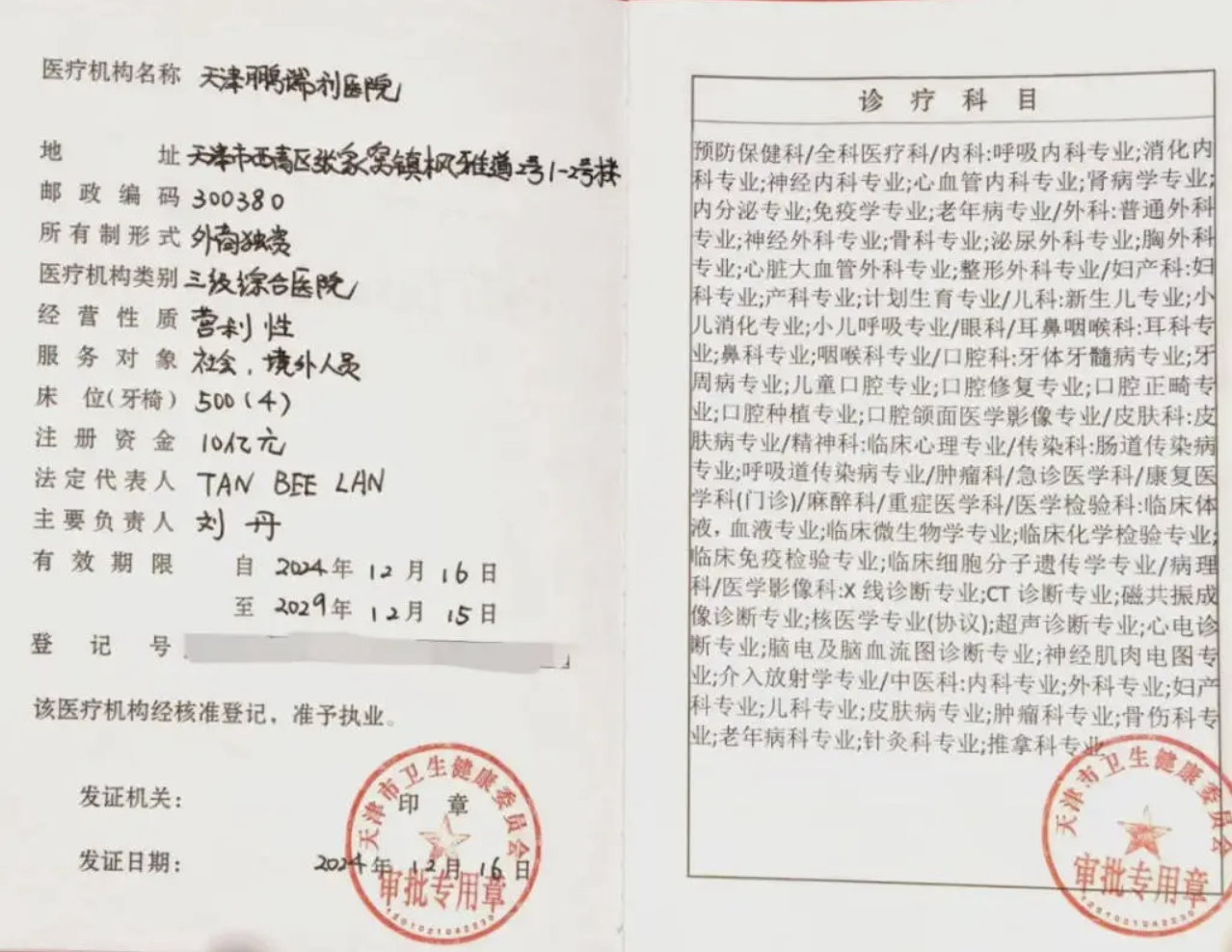
China’s first operating license for a wholly foreign-owned tertiary general hospital, featuring the handwritten entries. (Photo / Perennial)
The hospital stands next to Tianjin South railway station and uses the high-speed rail network to draw patients and older residents from Beijing, Tianjin, Hebei and potentially a wider area. Perennial describes the model as combining rail access with medical care, rehabilitation, eldercare and tourism.
The general hospital works with neighboring Perennial rehabilitation and brain hospitals. They share operating theatres, imaging equipment and clinical laboratories, creating a connected system from acute treatment through rehabilitation and long-term care.
The policy framework moved quickly. In September 2024, China’s Ministry of Commerce and two other departments issued a notice permitting wholly foreign-owned hospitals in Beijing, Tianjin, Shanghai and several other locations. In November, a pilot work plan was unveiled. And one month after that plan was published, the Tianjin hospital received the first operating license of its kind for a tertiary general hospital.
Perennial did not initially seek a place at the CIIE. Staff involved in recruiting exhibitors travelled to Tianjin, explained the event and invited the company to participate. Two days later, the group’s executive chairman and chief executive approved the plan.
The expo gives Perennial a global venue to explain a development that had received limited attention outside the sector.
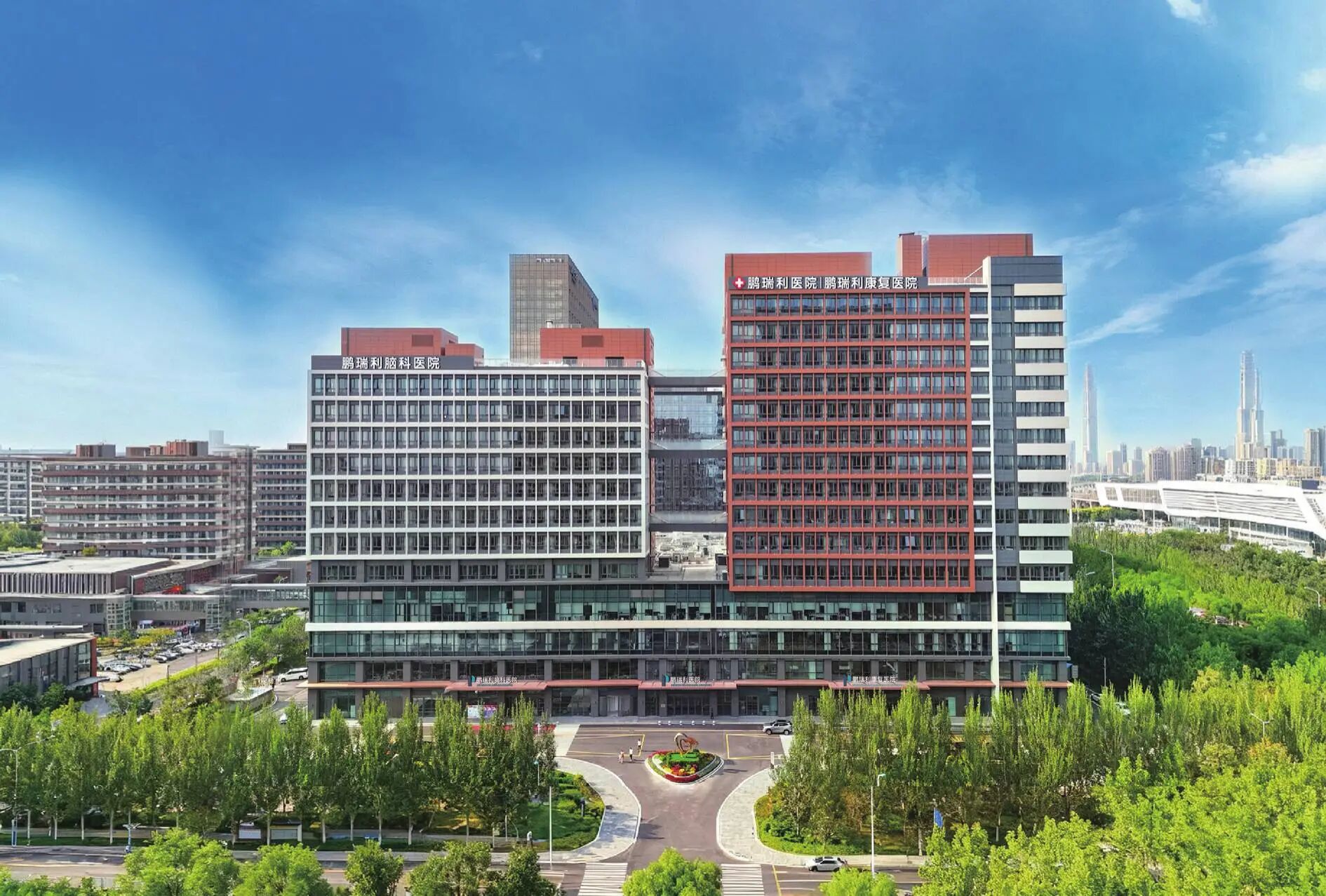
Tianjin Perennial General Hospital. (Photo / Perennial)
It could also attract interest from other foreign hospital operators. Tan Bee Lan, CEO of Perennial Healthcare, said large Southeast Asian medical groups contacted her to ask about the application process after the Tianjin approval.
Perennial is planning to reproduce elements of the Tianjin model in Kunming, Chengdu, Guangzhou, Xi’an and Chongqing, all cities with major high-speed rail connections. Those plans remain future projects, but the first hospital is already operating. The flight of this industry bellwether has effectively catalyzed follow-on interest across the entire sector, while the handwritten addition to its license records the moment the regulatory category caught up with the policy.