News

The 9th HQF | Parallel Session on “Free and Fair Trade and Cooperation for Industrial Competitiveness” Successfully Held Release date: 2026-11-09 Source:CIIE
On the afternoon of November 5, 2026, the Parallel Session “Free and Fair Trade and Cooperation for Industrial Competitiveness” of the 9th HongQiao International Economic Forum (HQF) was held in the InterContinental Shanghai HongQiao NECC Grand Ballroom. Hosted by the Ministry of Commerce of the People’s Republic of China, the Session focused on the automotive industry and brought together representatives from government, industry and academia to discuss ways of promoting a virtuous interaction between free and fair trade and the enhancement of industrial competitiveness.
I. Discussing Free and Fair Trade and Industrial Competitiveness
The world is undergoing profound changes unseen in a century, and industrial transformation is advancing by leaps and bounds. Countries are simultaneously confronted with the turbulence brought about by the transition from the old order to the new and the growing pains caused by the shift from traditional to new growth drivers, and are eager to seize the opportunities of a new round of industrial transformation to enhance their industrial competitiveness. Against this backdrop, it is more important than ever to clarify the relationship between free and fair trade and the enhancement of industrial competitiveness and to achieve a virtuous interaction between the two.
YAN Dong, Vice Minister of Commerce of the People’s Republic of China, attended the Session and delivered keynote remarks. He pointed out that openness and cooperation are important experience in China’s industrial development and competitiveness enhancement, and a key path for China to promote world prosperity through its own development. China has long and firmly upheld the multilateral trading system, supported free and fair trade, opposed protectionism, and opened its market to the world. He stressed that, in the face of the new challenges brought by the restructuring of the global order and the new opportunities brought by scientific and technological progress, openness and cooperation are the only way to prosperity and development in the world. China put forward a three-point proposal: opening up to draw in a steady stream of fresh momentum and create new market increments; enhancing competitiveness through cooperation to achieve mutual benefit and win-win results; and managing differences and frictions through dialogue to keep global circulation flowing smoothly.
Cecilie Myrseth, Minister of Industry and Commerce of Norway, James J. Heckman, Laureate of the Nobel Prize in Economic Sciences, and WANG Xiaoqiu, Chairman of the Board of SAIC Motor Corporation Limited, delivered keynote remarks in turn, sharing their views on enhancing industrial competitiveness through openness and cooperation.
II. First Launch of the Industrial Competitiveness Report
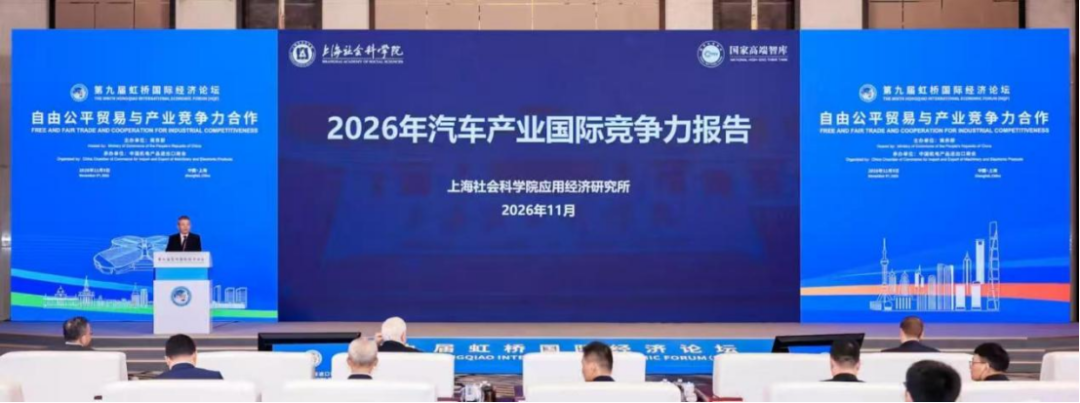
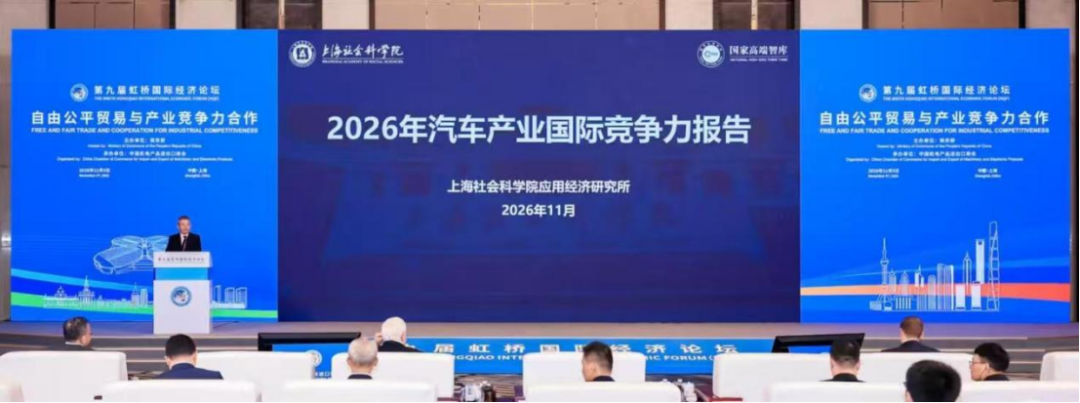
GAN Chunhui, President of Shanghai Academy of Social Sciences, launched the Report of the International Competitiveness of the Automotive Industry. This is the first time the report has been released at the HongQiao International Economic Forum. The report develops a multidimensional evaluation framework comprising 29 indicators across five key dimensions—industrial foundation strength, technological innovation capability, market competitiveness, global resource allocation capability and the enabling environment—and applies it to evaluate and compare the international competitiveness of the automotive industries in 41 major economies. It finds that global automotive competition is shifting from scale-based competition toward the integration of multidimensional capabilities, that the industry has moved from a single center to a multipolar landscape, and that it has entered a new stage of industrial capability reconfiguration and ecosystem-based competition. The report proposes that the global automotive industry move toward a more interconnected, inclusive and mutually beneficial industrial ecosystem, characterized by more coordinated supply chains, broader access to technological innovation, more open international trade, mutually beneficial cross-border investment and closer cooperation in global governance.
III. Government, Industry and Academia in Dialogue
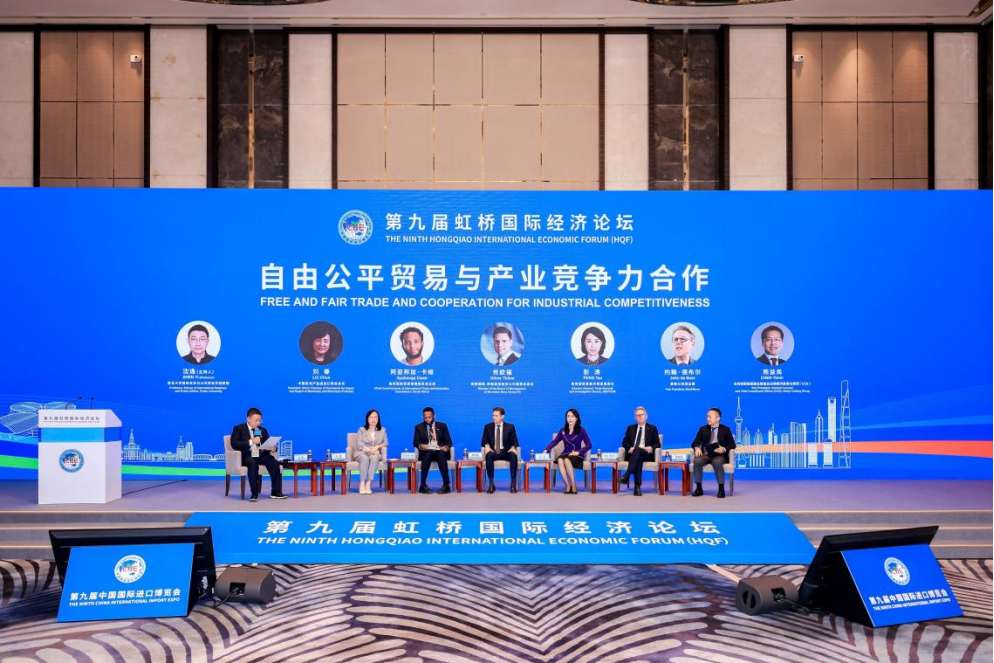
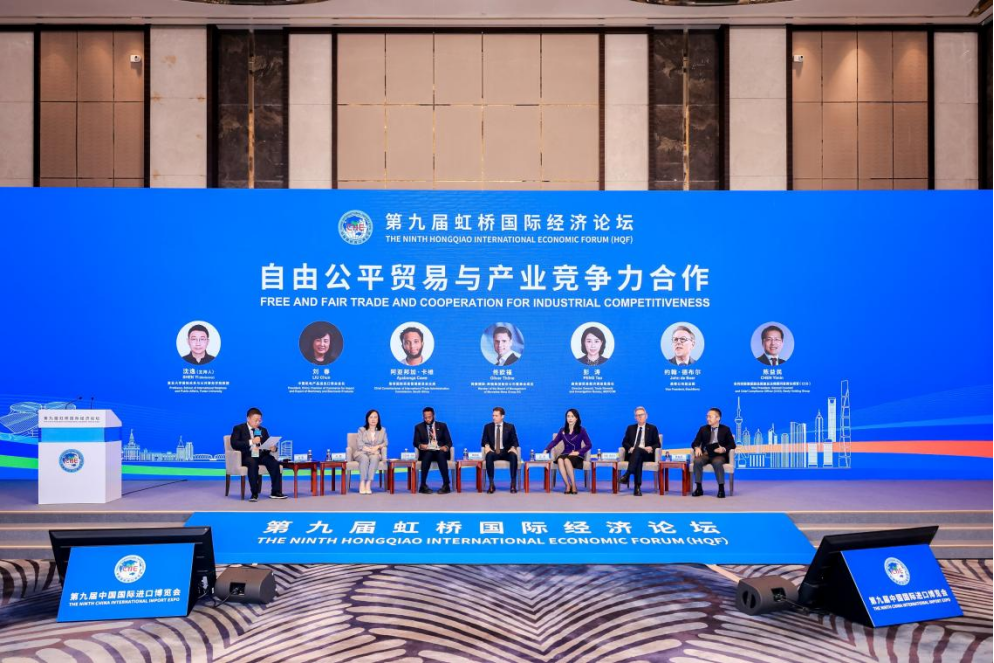
The roundtable discussion took the automotive industry as its point of entry. The automotive industry is highly globalized, with deeply integrated industrial and supply chains. It is relatively sensitive to tariff adjustments and trade remedy measures, is a sector on which the trade-policy attention of all parties tends to converge, and directly reflects the impact of changes in the policy environment on industrial competitiveness.
The Session was moderated by SHEN Yi, Professor at the School of International Relations and Public Affairs, Fudan University. The dialogue brought together heads of trade remedy investigation authorities—including PENG Tao, Director General of the Trade Remedy and Investigation Bureau of the Ministry of Commerce of the People’s Republic of China, and Ayabonga Cawe, Chief Commissioner of International Trade Administration Commission of South Africa—and industry representatives including LIU Chun, President of the China Chamber of Commerce for Import and Export of Machinery and Electronic Products (CCCME), Oliver Thöne, Member of the Board of Management of Mercedes-Benz Group AG, CHEN Yimin, Vice President, General Counsel and Chief Compliance Officer of Geely Holding Group, and John de Boer, Vice President of BlackBerry. They exchanged views, from the government and industry perspectives respectively, on a policy environment conducive to enhancing industrial competitiveness.
Participants held that the automotive industries of various countries have their respective strengths and are interdependent, and that open competition is the foundation for enhancing industrial competitiveness. They also held that the fragmentation of industrial and supply chains and a closed market do not serve the common interests of any party, and that protectionism cannot solve the root causes of industrial development. All countries should uphold mutually beneficial cooperation and healthy competition, use trade-restrictive measures prudently, and jointly maintain a stable and predictable policy environment.
A total of about 300 participants attended the Session, including guest representatives from Chinese and foreign government departments, industry associations, automotive enterprises, and think tanks and universities, as well as journalists.
The China International Import Expo Bureau (hereinafter referred to as the "CIIE Bureau") cites or reposts media reports for non-commercial purposes to facilitate information sharing. Such actions do not constitute an endorsement of the accuracy, authenticity, or legality of the original content, nor do they reflect the official stance of the CIIE Bureau. All copyrights and legal responsibilities for the reposted content remain with the original publishers and authors.
If any individual or entity believes that content shared on this website infringes their legitimate rights and interests, please promptly notify us in writing, providing detailed explanations, supporting documentation, and rationale. Upon receiving such materials, we will promptly remove or rectify the disputed content or take other appropriate measures.
Reposted or cited information may be time-sensitive. Users are advised to exercise independent judgment regarding the accuracy and completeness of the content. The CIIE Bureau shall not be liable for any direct, indirect, incidental, consequential, special, punitive, or exemplary damages arising from the use of or inability to use the information or links provided on this website.。
The CIIE Bureau respects intellectual property rights and is committed to delivering high-quality content services within a lawful and compliant framework.